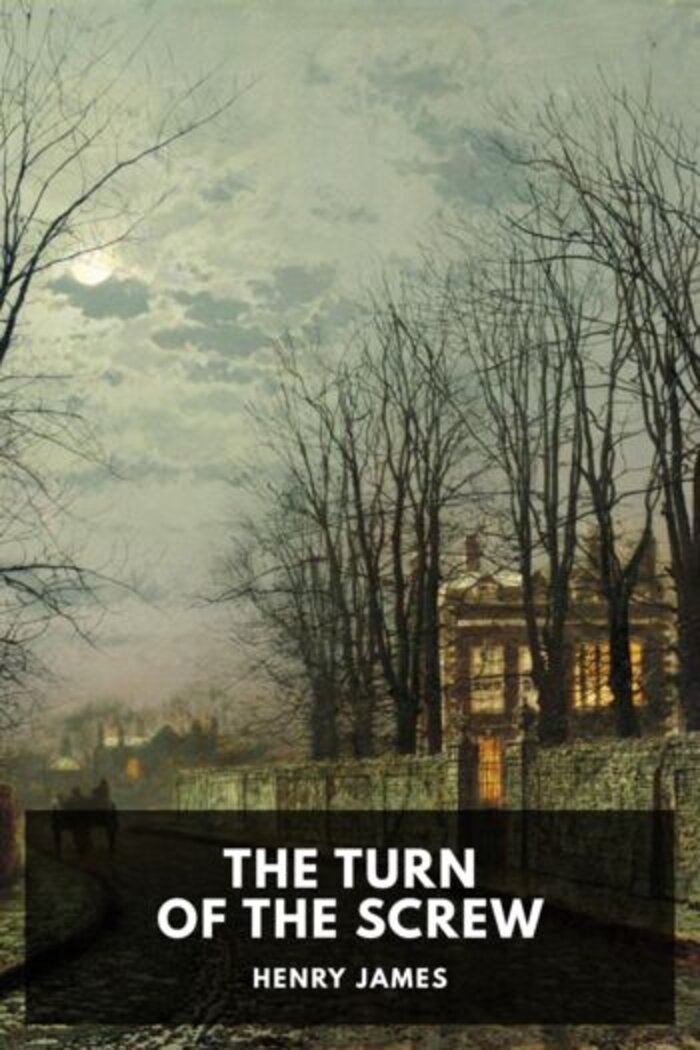
The Turn of the Screw
A young governess arrives at a remote English country estate to care for two orphaned children, Miles and Flora, and quickly comes to believe the house is haunted by the ghosts of two former servants. As she struggles to protect her charges from what she sees as a supernatural threat, the line between perception and reality grows increasingly blurred, and the tension builds toward a devastating conclusion.
Published in 1898, The Turn of the Screw is Henry James’s most famous work of supernatural fiction and one of the most debated stories in English literature. Readers and critics have argued for over a century whether the ghosts are real or whether the governess is an unreliable narrator projecting her own anxieties onto innocent children. James himself, characteristically, refused to settle the question.
The novella’s power lies in its masterful ambiguity. James uses the governess’s increasingly frantic first-person narration to create an atmosphere of mounting dread, where every detail can be read two ways. It stands as a landmark of psychological horror and a testament to the unsettling possibilities of the unreliable narrator.