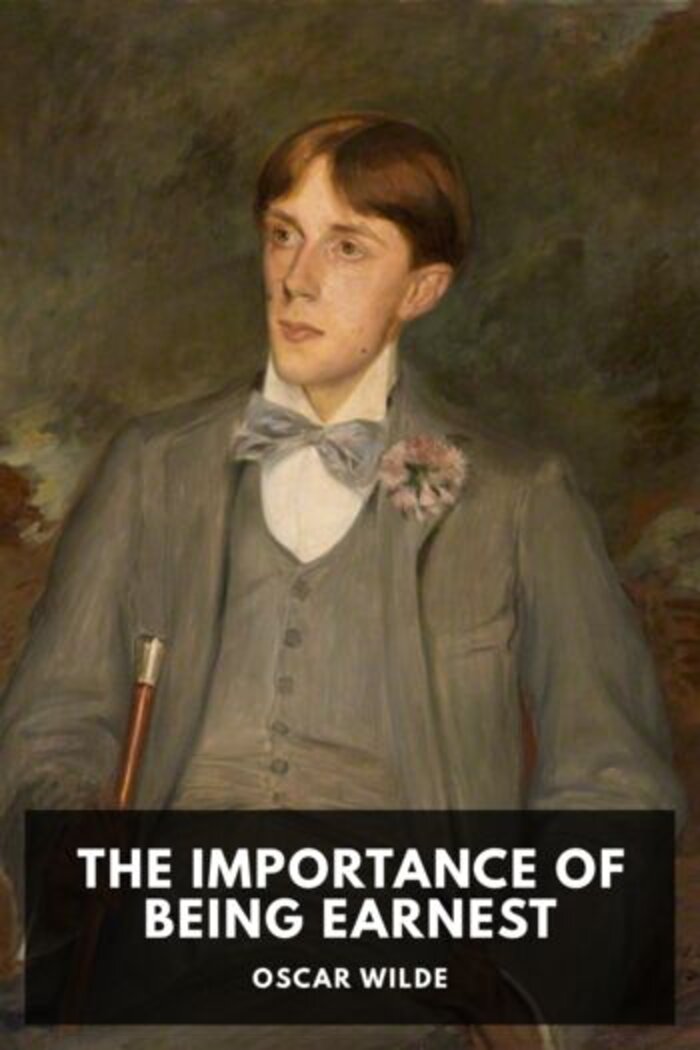
The Importance of Being Earnest
Jack Worthing and Algernon Moncrieff are two gentlemen who have each invented fictional alter egos — Jack’s is “Ernest,” used for escapes to London, while Algernon’s is “Bunbury,” a perpetually ill friend who provides excuses to avoid obligations. When both men use the name Ernest to court the women they love, their deceptions collide in a farcical tangle of mistaken identities, handbag mysteries, and cucumber sandwiches.
First performed in 1895, The Importance of Being Earnest is Oscar Wilde’s most beloved play and the crowning achievement of his theatrical career. Subtitled “A Trivial Comedy for Serious People,” it attacks Victorian earnestness with such sustained wit that nearly every line has become quotable. The play premiered just weeks before Wilde’s arrest, making it the last work he would see performed in his lifetime.
Wilde’s genius here is to construct a perfectly absurd world in which nothing is serious and everything is stylish. The comedy operates on pure language — puns, paradoxes, and epigrams that turn conventional morality inside out. Beneath the glittering surface lies a sharp critique of a society that valued appearance above all else.