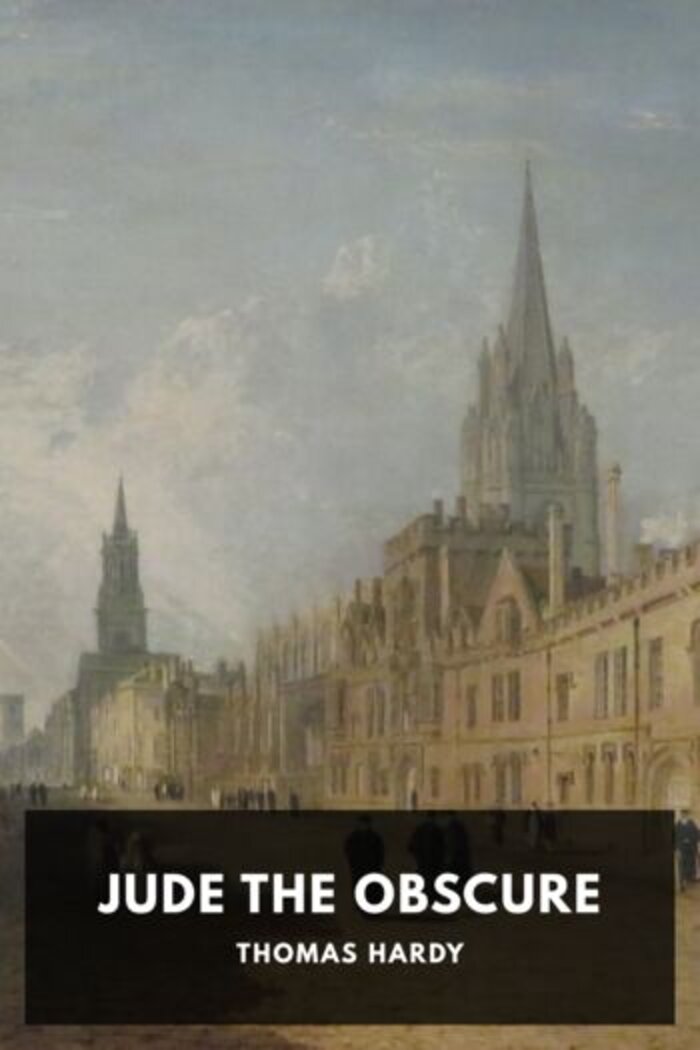
Jude the Obscure
Jude Fawley is a stonemason in rural Wessex who dreams of becoming a scholar at the university city of Christminster. Trapped first by a hastily arranged marriage to the coarse Arabella Donn, then drawn into an unconventional relationship with his free-thinking cousin Sue Bridehead, Jude finds every path to fulfillment blocked by rigid social conventions, class barriers, and his own flawed choices.
Published in 1895, Jude the Obscure was Thomas Hardy’s final novel, and the firestorm it provoked helped convince him to abandon fiction for poetry. Critics and clergymen attacked it for its frank treatment of sexuality, marriage, and religious doubt — one bishop reportedly burned his copy. Hardy, stung by the hostility, called the reception “the experience of curing me of all interest in novel-writing.”
The novel is Hardy’s darkest and most uncompromising work, a sustained indictment of a society that crushes ambition and punishes love. Jude’s doomed struggle against the class system and the institution of marriage remains powerful reading, and the book’s unflinching honesty about desire and disappointment gives it a startlingly modern feel.