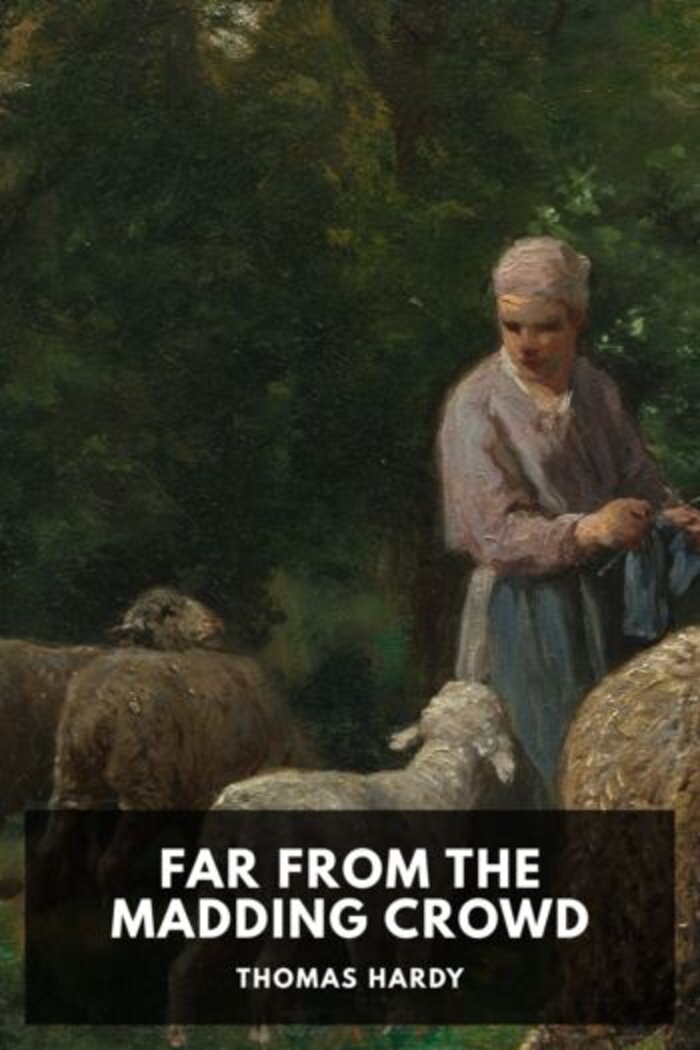
Far from the Madding Crowd
Bathsheba Everdene inherits a farm in the Wessex countryside and finds herself courted by three very different men: Gabriel Oak, a steadfast shepherd who loved her before her fortune; William Boldwood, a wealthy neighboring farmer driven to obsession by a carelessly sent valentine; and Sergeant Troy, a dashing soldier whose charm masks a reckless and selfish nature. Bathsheba’s choices among them drive a story of passion, jealousy, and hard-won wisdom.
Published in 1874, Far from the Madding Crowd was Thomas Hardy’s fourth novel and the first to bring him wide success. It established the fictional county of Wessex — based on Hardy’s native Dorset — as the setting for nearly all his major works. The novel’s title, borrowed from Thomas Gray’s “Elegy Written in a Country Churchyard,” signals Hardy’s central theme: the drama that unfolds in seemingly quiet rural lives.
Hardy’s portrait of agricultural life is richly detailed — sheep-shearing, haymaking, and the rhythms of the farming year are rendered with the authority of firsthand knowledge. Yet the novel’s lasting power comes from Bathsheba herself, an independent woman navigating a world that offers her few good options, and from Gabriel Oak, whose patient devotion stands as one of the most convincing portraits of steadfast love in English fiction.