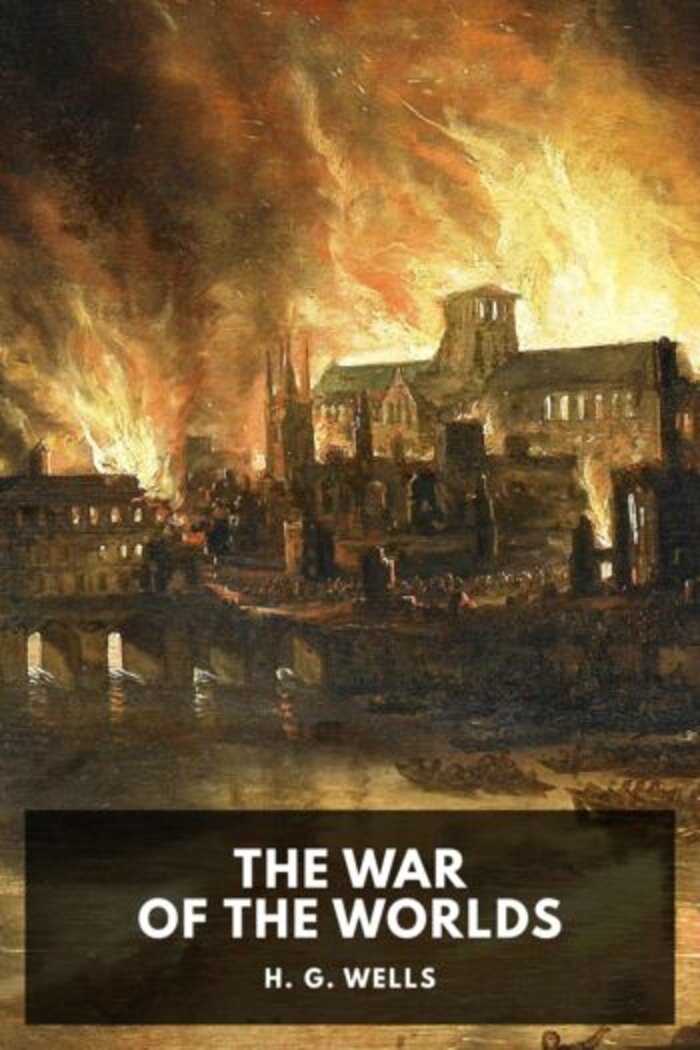
The War of the Worlds
Cylinders fall from the sky onto the Surrey countryside, and from them emerge Martians — vast, intellects cool and unsympathetic — who unleash towering tripod war machines armed with heat rays and poisonous black smoke. As the British army is swept aside, the unnamed narrator flees through a landscape of burning towns and refugee-choked roads, witnessing the complete collapse of Victorian civilization in a matter of days.
Published in 1898, The War of the Worlds was H. G. Wells’s fourth scientific romance and remains the most influential alien invasion story ever written. Wells deliberately set the destruction in the comfortable Home Counties of southern England, forcing his readers to experience what it felt like to be on the receiving end of imperial conquest — a pointed inversion of British colonialism that was radical for its time.
The novel’s power lies in its unflinching realism. Wells describes the Martian invasion with the matter-of-fact precision of a journalist, grounding the fantastic in mundane detail — abandoned houses, spoiled food, the eerie silence of a depopulated London. Orson Welles’s 1938 radio adaptation famously caused panic, but the book itself remains more unsettling than any adaptation, a story about the fragility of civilization that has lost none of its force.