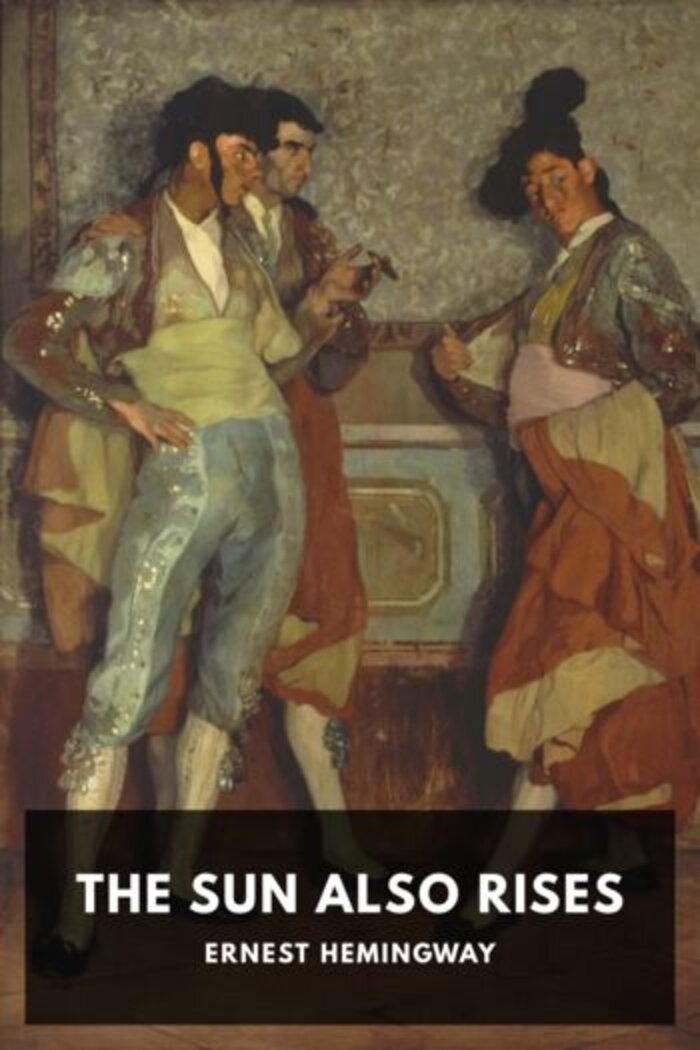
The Sun Also Rises
Jake Barnes, an American journalist in 1920s Paris, is in love with Lady Brett Ashley, a beautiful and reckless Englishwoman — but a war wound has made a physical relationship impossible. Together with a circle of hard-drinking expatriate friends, they travel from the cafés of the Left Bank to the bullfights of Pamplona, where rivalries, jealousies, and Brett’s destructive magnetism bring the group’s simmering tensions to a head.
Published in 1926, The Sun Also Rises was Hemingway’s first major novel and the book that defined the Lost Generation. The characters were drawn so directly from Hemingway’s own circle of expatriates in Paris that several friends recognized themselves and were furious. Yet the novel transcends its origins as a roman à clef through Hemingway’s revolutionary prose style — spare, understated, and charged with emotion that is felt precisely because it is never stated.
Beneath the surface of café conversations and fiesta revelry lies a profound portrait of post-war disillusionment. Jake and his friends drink, travel, and quarrel because they have been stripped of the values and certainties that might give their lives meaning. The bullfight, with its ritual confrontation of death, becomes the novel’s central metaphor — the only arena where courage and dignity still matter.